

Half of Idaho school districts have poverty rates among their students above the national poverty rate for children ages 5 to 17 and nearly all of them are in rural parts of the state.
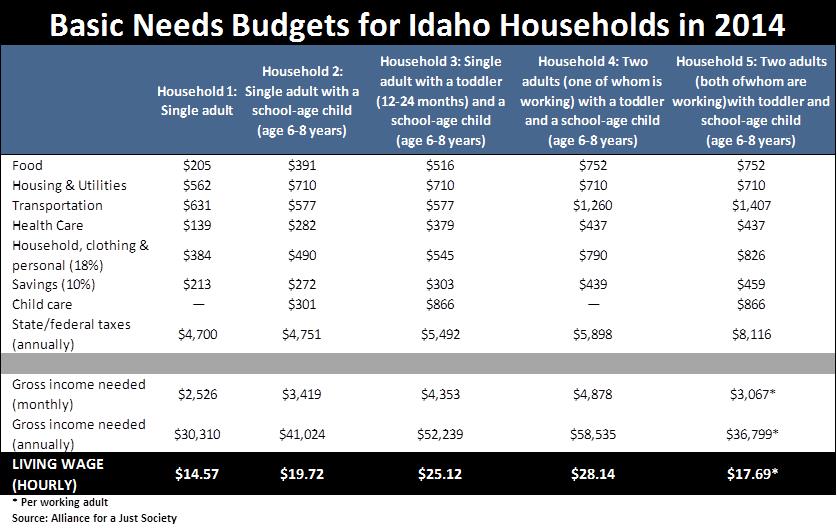
Official poverty estimates by the U.S. Census Bureau are augmented by estimates from government agencies such as the Department of Housing and Urban Development and private organizations like the nonprofit Alliance for a Just Society in Seattle, which publishes an annual living wage report.
Government poverty estimates are important because they determine eligibility for housing rental and heating assistance, subsidies for home maintenance and repair, and low-interest, first-time home mortgages. The living wage is the amount a household must earn to meet basic expenses. The Alliance for a Just Society adjusts its calculations to reflect the different cost-of-living levels in cities and states.
The 2014 Occupational Employment and Wage Survey by the Idaho Department of Labor estimated the median wage in Idaho at $14.68 an hour – enough to meet the basic needs of a single adult using the alliance criteria. The median is where half make more and half make less.
The Census Bureau’s estimate of median household income in Idaho is $21.78 an hour, which is more than $3 an hour below the alliance’s estimate of the living wage needed to support a household of one adult and two children – the closest example to the average Idaho household that the Alliance uses. If the average household is also in the middle of all households, that leaves the income for the average Idaho household 13 percent short of meeting its basic living expenses.
These Small Area Income and Poverty Estimates put the three school districts with the highest student poverty rates in southwestern Idaho, where 33 of the 115 school districts are located and the student population exceeds 25,000.
The Notus School District had a poverty rate of 40 percent, the highest in the state, followed by Midvale in Washington County and Caldwell in Canyon County at around 35.5 percent. Overall, the region had a comparatively moderate student poverty rate, in part because of high income pockets in areas like western Ada County that includes parts of western Boise, Eagle and Meridian.
In contrast, the Swan Valley School District in rural eastern Bonneville County had a student poverty rate of just 8.1 percent. That region of the state has the second lowest regional student poverty rate.


Comparisons with other states indicate Idaho’s poverty rate is middle of the road in most age categories. The southern states continue to experience high levels of poverty while the areas with extreme winter conditions entice new residents with jobs as evidenced in the chart below. Residents of Alaska usually live there because they love the wildlife and scenic outdoors or they have a high paying job. North Dakota has experienced a rush of workers similar to the gold rush days and infrastructure struggles to keep up. It could be worse as many move there in a recreational vehicle with the intent of temporary work and not settling down permanently which lessens the impact somewhat.

Jan.Roeser@labor.idaho.gov, regional economist
(208) 735-2500 ext 3639