

The term “digital divide” was popularized in the late 1990s and described a growing gap between those individuals with access to the internet and other information and communications technology, and those without. Since then, concerted effort has been made to provide physical access to close this gap.
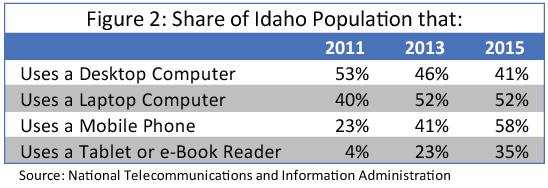
Today, most households, workplaces and classroom computers are internet enabled. Data from 2015 showed that more than 80 percent of Idaho’s civilian population ages 3 and up used the internet, more than double the rate in 1998. Digital technology has evolved rapidly to incorporate a wide range of uses from emailing to blogging to online and blended learning in classrooms. Digital hardware and software are constantly in flux with the more recent shift to mobile devices and cloud storage.
The Equipment Gap
When the U.S. Department of Commerce National Telecommunications and Information Administration coined the term digital divide, it was seen more as an “equipment gap” where those on the disadvantaged side of the divide lack internet service providers and personal computers, rendering them ill-equipped to participate in the information economy. In Idaho, despite the growth of information and communications technology, there still remains notable geographic variation in physical access across the state. For example, Latah County in northern Idaho, home of the University of Idaho, has the largest percentage of its population (close to 70 percent) using high-speed internet at home while in counties like Lincoln County, less than half of the population have access to high-speed internet.
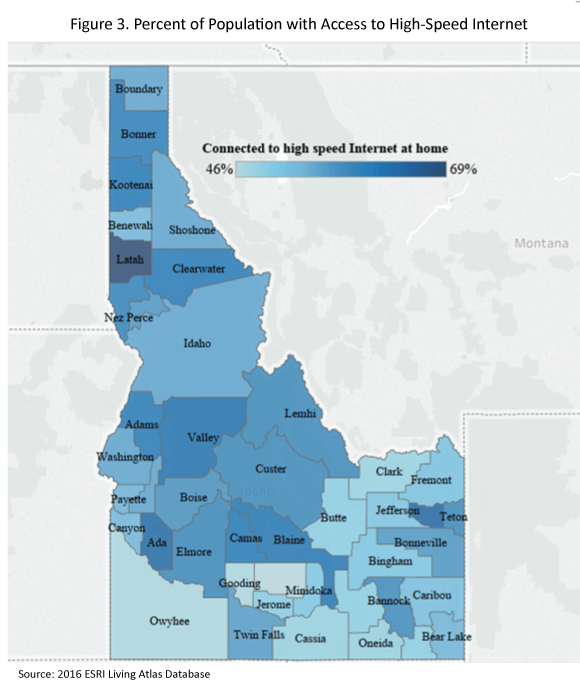
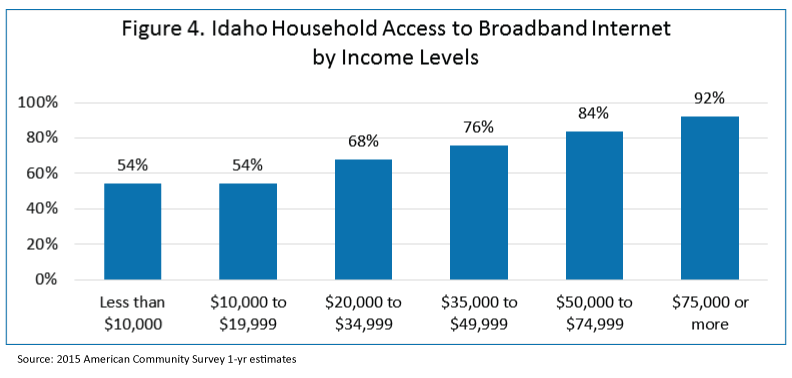
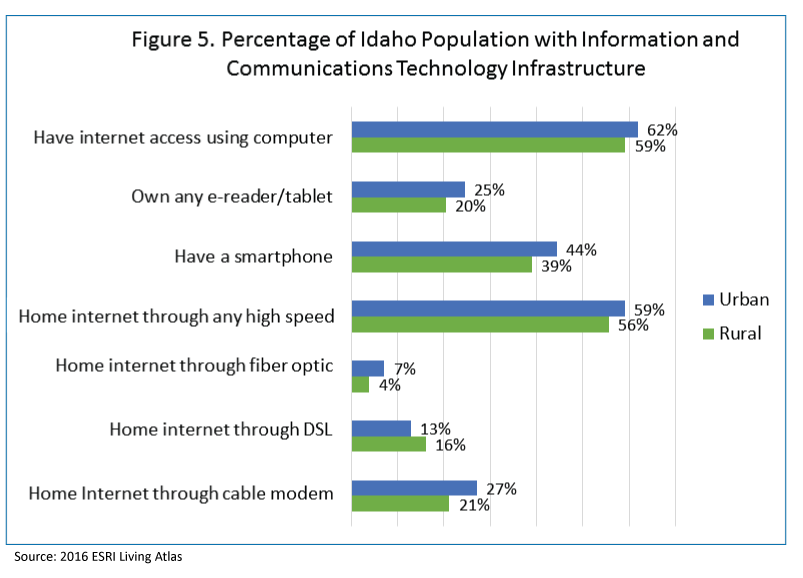
In addition to the smaller economy that typifies most rural counties, population density and market demand is often too low for internet service providers to consider them economically viable areas. Rural areas thus face a challenge connecting with emerging technologies and competing on a wider scale.
Digital Literacy
It is increasingly apparent that the digital divide today means more than a simple equipment gap that physical access is not sufficient to breach. As such, flooding a rural community with fiber optics and tablets does not necessarily result in the meaningful use of technology. Digital literacy, the skill to adopt and use technology in a productive way, is another layer of access required to bridge the divide. However, acquiring digital literacy is a far more formidable task than providing physical access to information and communication technology.
One difficulty with digital literacy is in defining how it should be measured. People use information and communication technology in a variety of ways and this leads to varying levels of skill. This difference in skill is often thought of as a second-level digital divide.
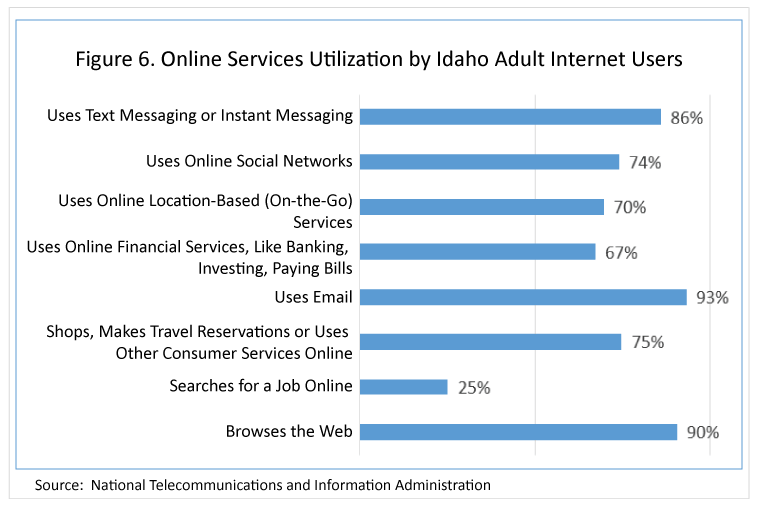
Agencies like the National Center for Education Statistics have developed scales for measuring digital literacy that encompasses these fundamental skills. However, a good litmus remains innovation and economic growth. From an economic perspective, digital literacy is human capital and when increased, all things being equal, that drives economic growth.
Esther.Eke@labor.idaho.gov, regional economist
Idaho Department of Labor
(208) 236-6710 ext. 4331