Tag Archives: Northern Idaho

Hard Hats, Hammers and Hot Dogs Goes Social

Idaho Forest Group log processor

This Idaho Forest Group log processor grabs, strips and cuts logs as a student is shown the equipment controls.

A total of 400 students, more than 50 businesses and many volunteers participated in the 9th Annual Hard Hats, Hammers & Hot Dogs event in Kootenai County in early October. The career day is designed to give students exposure to manufacturing, construction, logging, truck driving, and a variety of other skilled trades.

Students toured the new North Idaho College Career and Technical Education (CTE) facility, located next to the Kootenai Technical Education Campus (KTEC) where the event was held. CTE has CAD technology, Welding, Automotive, Machine and CNC classes along with other technical programs.

After the tour, students were able to get hands-on experience operating dozers, skid steers, log processors and much more. The students also engaged in activities indoors with the idea of exposing them to the many occupational opportunities in North Idaho.

Continue reading →

North Idaho College to Use $25,000 Micro-Grant for Aviation Industry Training

North Idaho College plans to use a $25,000 Idaho Department of Labor micro-grant to train 28 aviation assemblers and mechanic assistants beginning this summer.

Initially, training will be offered to high school seniors who want to work in the industry after graduation. The first of two courses will take place this July and the second in July 2017 at Sandpoint High School. Training will include a combination of online courses and classroom laboratory settings. Those who complete the assembler course in the summer following graduation will be eligible for employment.

Read more details in the full news release.

Workshop in Northern Idaho Helps Businesses with Succession Planning

With the nation’s unemployment rate hovering just above 5 percent, employers are finding it difficult to recruit and keep talented workers. Baby boomers will continue retiring over the next 25 years, leaving both a shortage of workers and a deficit of valuable traditional skill sets. Employers are looking for ways to attract and keep the transitioning generation of workers.

Earlier this summer, the Idaho Department of Labor Kootenai County office held a workshop for area employers about building succession plans as one means of keeping those talented workers.

Succession planning involves identifying and developing current employees with the potential to fill key leadership roles in the business.

Continue reading →

Recession, Recovery in Northern Idaho Recounted

This is the final article written by Alivia Metts as the Department’s northern-based regional economist. She recently moved on to other career pursuits.

Telling the story about the economy through the lens of a regional economist throughout the economic volatility of the past seven to eight years has had its challenges, but it has been far more exciting and rewarding.

I started at the Idaho Department of Labor during the depths of the recession when employment in northern Idaho  dropped significantly. Today, nearly all sectors are firing on all cylinders, wage pressure is starting to ignite and economic activity is rolling.

Recession

The recession really started to take hold in 2008 and became persistent and painful for about two years. Layoffs were occurring in nearly every industry and the number of people holding multiple jobs to make ends meet increased substantially. Jobless individuals were filing for unemployment benefits at an astounding rate. The number of new claims filed in 2009 was nearly 44,000 compared with just over 18,000 in 2007.

Continue reading →

Northern Idaho Shares Hot Jobs Demand

With unemployment rates down to levels not seen since the start of the recession and job growth on the rise, job seekers are becoming more strategic when looking for work and seek jobs in demand

Overwhelmingly, the health care sector and its occupations top every ranking — growth, number of jobs in the economy, annual openings and highest wages, according to the Idaho Department of Labor’s latest long-term state and regional job projections through 2022 regional projections which look at pay and growth prospects.

Continue reading →

2014 Data Shows Economic Promise for Northern Idaho

Northern Idaho’s economy showed real life in 2013 and the data currently available for 2014 are stacking up well.

Despite the continued slowness of the state’s economic recovery, the most recent preliminary data for 2014 through June shows regional employment up 1.8 percent over the first half of 2013 with the same three counties leading the way: Kootenai County was up 3.6 percent, Boundary County up 2.1 percent and Bonner County increased by 1 percent. Benewah County also saw fractional employment growth but not enough to offset a 5 percent decline in Shoshone County. Continue reading →

Executive Director for St. Vincent De Paul Inspires Other Employers

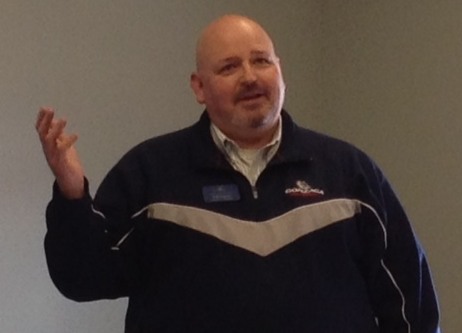
Jeff Conroy, executive director for St. Vincent De Paul, encourages all of his employees to have a voice in how the company is run.

Jeff shared his principles of operation at the February Partners in Business event in Post Falls. A record number of attendees came to hear him discuss his Vinny University.

Jeff Conroy

Jeff Conroy

New employees at St. Vincent DePaul attend Vinny University which includes a 12-week course inspired by the book, ‘The Disney Way’ by Bill Capodagli and Lynn Jackson. Jeff shared some of the original success principles in the book including ‘having fun.’

After employees complete that course, they move to an 8-week class called “Creating Magic” taken from a book with the same name written by Lee Cockerell. Jeff’s motto is “Don’t be acceptable, be exceptional!”

Jeff’s employees are called ‘team members’ and they have a voice in the operational improvement of the organization. In addition, they have developed their own incentive plans. When problems occur, the issues are brought to the ‘Breakfast Club’ (think tank) for ‘story boarding.’

Continue reading →

Per Capita Personal Income Rising in Northern Idaho, Declining Statewide

Personal income is the total of wages, business profits, investment earnings and transfer payments like Social Security and pensions, and in Idaho that total jumped 3.9 percent from 2011 to 2012.

Per capita personal income – that total divided equally among every man, woman and child – was $34,481 in 2012 in Idaho – 79 percent of the national average of $43,735. Idaho’s per capita income has been steadily declining in relation to national per capita income over the past decade, dropping from 83 percent in 2002 when it ranked 40th among the 50 states to 49th among the states in 2012.

During the same period, personal income and per capita income increased for all five northern Idaho counties. The largest increases were in Benewah and Shoshone counties, where there was a significant increase in wages and salaries. Compensation and bonuses from the mining industry was most likely the source in Shoshone County, and earnings in local government probably explains the growth in Benewah. Continue reading →

Partners in Business Group Provides Avenue for Networking

Kootenai County employers interested in learning more about networking and best practices for businesses might find the Partners in Business group worth a look.

The professional networking group was started more than 20 years ago with the purpose of creating mutually beneficial business relationships. The meetings are designed to inform, inspire and educate the business community by tapping area leaders and experts as speakers for the monthly meeting.

Stacey Hanlon, Idaho Department of Labor workforce consultant, introduces Rep. Luke Malek at the November Partners in Business meeting.  Malek discussed the state's health insurance exchange.

Stacey Hanlon, Idaho Department of Labor workforce consultant, introduces Rep. Luke Malek at the November Partners in Business meeting. Malek discussed the state’s health insurance exchange.

“It’s an inexpensive way to learn how to grow and expand your business and to network with other businesses in your community,” said Ricia Lasso, Idaho Department of Labor’s regional business specialist and one of the group’s early coordinators.

Continue reading →

Putting the Job Search Puzzle Together

Kevin Mansfield believes he has been under-employed since moving from California to Idaho nearly five years ago. He worked as a private investigator for the past 12 years, traveling all over the West when assignments came in, expending a lot of personal money just to work a case and then waiting two to three weeks to get paid.  While the pay was good, the work was sporadic.

After being randomly selected for an Idaho Department of Labor job search assessment as an unemployment claimant, Kevin was required to attend a class outlining what services were available from the Labor Department and how to look for work.

“The guy who taught the class was fabulous (Frank Garcia), said Kevin. “He obviously had to deal with  ‘students’ who could have cared less about being there and were just going through the motions because if they didn’t show, they would lose their UI benefits.”

“I was engaged and asked a lot of questions. I really wanted a different life,” Kevin said. After  class, Kevin had a discussion with Frank, who recommended that Kevin talk to the local veterans representative.

Kevin was told about VRAP (Veterans Retraining Assistance Program), which pays a monthly stipend for education in a critical career. He was accepted into the program and began school at North Idaho College as a medical billing specialist with an emphasis in medical coding. Kevin said it was important that the majority of the classes were online, so he could continue to work as a private investigator.

Kevin was told about a new-hire program at Kootenai Health for medical coding students. “In a nutshell, they were going to pay for the training and for me to continue to go to school full time,” Kevin said. He was one of 13 selected for the program for the fall semester.

According to Kevin, there were “two critical pieces of the puzzle pieces coming together” to get him on the way to his new career.

  • “I learned about the VRAP program and everything started to come together after that.”
  • “The people involved all took an active, interested look at my circumstances and we came up with a plan.”